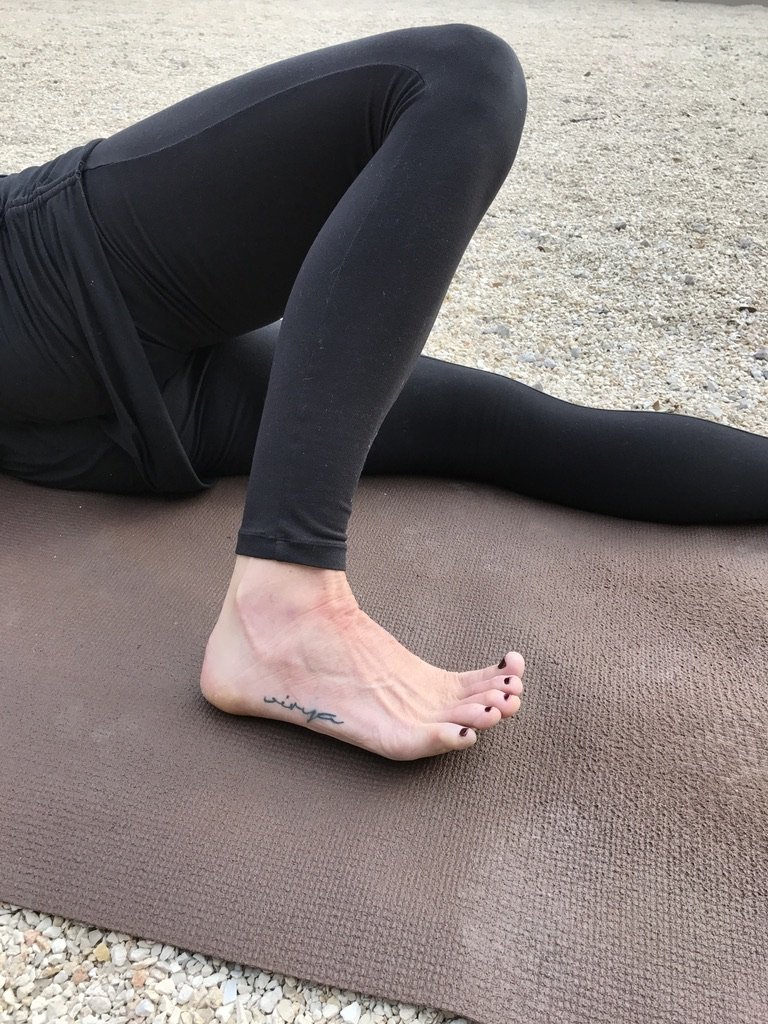
Through neurosomatic movement, we do not just train the body;
we reprogram the nervous system to rewire how we
sense, move, and live.
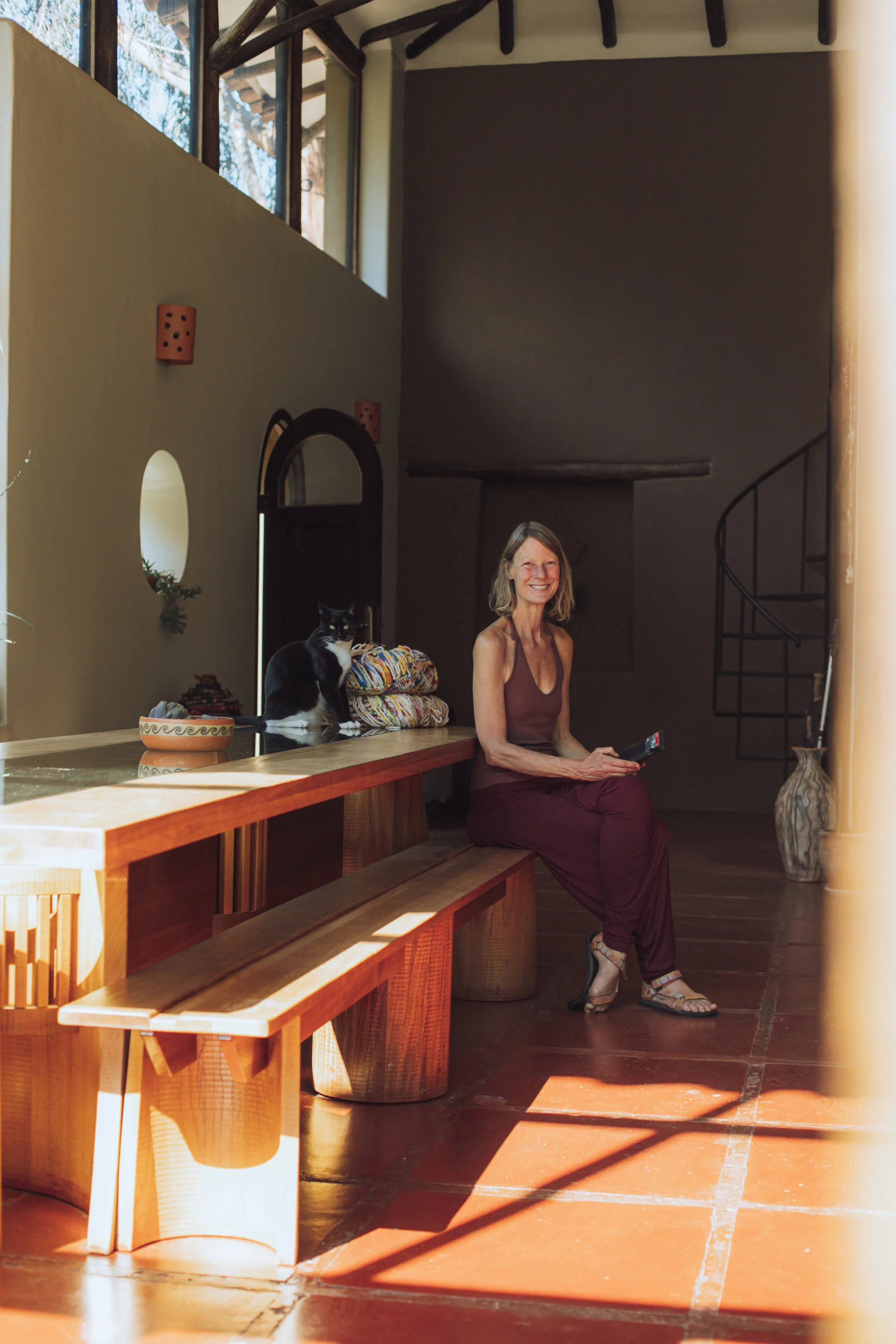
Meet Jyl
I've spent most of my adult life saying yes to things before I knew exactly what I was getting myself into. With a background in business and design, and a student of yoga since 1990 (before the online days!) I first turned towards styling (music and film) in Los Angeles, Austin and Nashville, which led to opening two clothing and chocolate stores that I owned for over twelve years…followed by a yoga & movement studio and a
501-c3 non-profit corporation that brought yoga and meditation to people who wouldn't otherwise have access to it.
And, all the while, nearly three decades chasing an increasingly specific obsession with chocolate and cacao (see below for
more about my journey & work with chocolate).
I’m lucky in that most of these ventures thrived. And some taught me things I could only have learned by watching them not work. I've been fortunate to get to try - and that's not something I take for granted (even on the hard days.)
El Verde is where all of it seems to have been heading, whether
I planned it that way or not: a retreat space in Peru's Sacred Valley where chocolate, geeky neuro-based movement, and balancing sustainable practices with comfort finally get to live under one roof.
LIcenses, Certifications & Trainings
- Senior Teacher, Prajna Yoga (2001)
- SATYA Somatic Movement Educator (2004)
- MD Anderson Trauma-Informed Yoga Training (2012)
- Street Kids Trauma Informed Yoga Training (2012)
- Bent On Learning Yoga Teacher (2012-2013)
- Applied Embodied Mindfulness Training (Jill Satterfield 2013)
- Founder 501c3 Community Yoga Austin (2013)
- Yin Yoga (Sarah Powers 2014)
- Yin Yoga (Theresa Murphy 2017)
- Licensed Massage Therapist (2013)
- Ayurvedic Bodywork & Cooking (Kare Institute, 2012)
- Craniosacral Therapist (Upledger 2015, Milne Institute 2018)
- Body Mind Centering Practitioner (2016)
- Functional Range Conditioning/FRC (2019)
- Movement with a Brain (2019)
- Z Health Neuro Education (2020 - current)
- Next Level Neuro Coach (2025)
my chocolate story
(aka why is she always talking about chocolate?!)
Like so many of us, my love of chocolate began at a very young age.
A relative was in the chocolate business and, in the 1970s, took it upon himself to hire university researchers to study the potential benefits of cacao—long before that conversation became commonplace.
Chocolate followed me through many of my adventures, eventually leading to two in-store chocolate shops in the US. Almost by coincidence, the shop opened just as the craft chocolate movement was beginning to take hold.
As bean-to-bar makers began looking for places to introduce their chocolate, many came through my doors. They didn't just bring chocolate. They brought stories—about their cacao, where it came from, how it was fermented and dried, the techniques they were experimenting with, the equipment they were using. I became increasingly curious about the mysterious cacao farms behind all of it.
Being in Texas made it relatively easy to travel to Guatemala, Costa Rica and Mexico. And before I knew it, what had started as a way to satisfy a sweet tooth had become a full-blown infatuation.
My palate changed. My appreciation for chocolate changed. And, more importantly, my sense of awe for the enormous amount of work involved in transforming this extraordinary fruit into the chocolate we know and love changed.
In 2007, I began sharing that passion through craft chocolate tastings and through experiences centered around cacao—what would now commonly be called “cacao ceremonies,” although I tend to avoid that terminology whenever possible.
Peru had always been on my radar when it came to cacao. I finally made it here in 2015, never imagining that this spectacularly complex country would eventually become home.
When I tell people I know a lot about chocolate, it can sound conceited.
It's just the truth.
And, much like yoga, the more I learn, the more I realize how much there is still to learn.
Today, I consider myself an advocate for Peruvian cacao farmers and Peruvian craft chocolate makers. And as craft chocolate has grown in popularity—and, unfortunately, as greenwashing has grown alongside it—I think it's more important than ever to look beyond the bar.
Because not all cacao is equal.
And the story behind a chocolate bar—or a cup of so-called “ceremonial cacao”—is far more complicated than most people realize.
Growing, harvesting, fermenting, drying, transporting, roasting and transforming cacao is extraordinarily labor-intensive. It takes time, knowledge, skill and an enormous amount of care. And for many of the people doing that work, it does not necessarily translate into financial abundance.
At the same time, cacao has deep cultural and historical significance that deserves more than a trendy label.
I want to help people understand what's actually behind what they're consuming—to taste more thoughtfully, ask better questions, and appreciate the people, places and work that make chocolate possible.
Because if we're going to call something sacred, perhaps the least we can do is understand it, respect it, and pay the people behind it accordingly.
If interested, you can follow my merging of neurology & chocolate here:
@brains.and.beans
Technology Integration
Discovery
We conduct rigorous evaluations that illuminate inefficiencies and establish a definitive baseline for improvement.
Implementation
Proactive identification and mitigation safeguard assets and uphold regulatory compliance.
Optimization
We cultivate expertise through structured training and mentorship that empower teams to drive sustained progress.