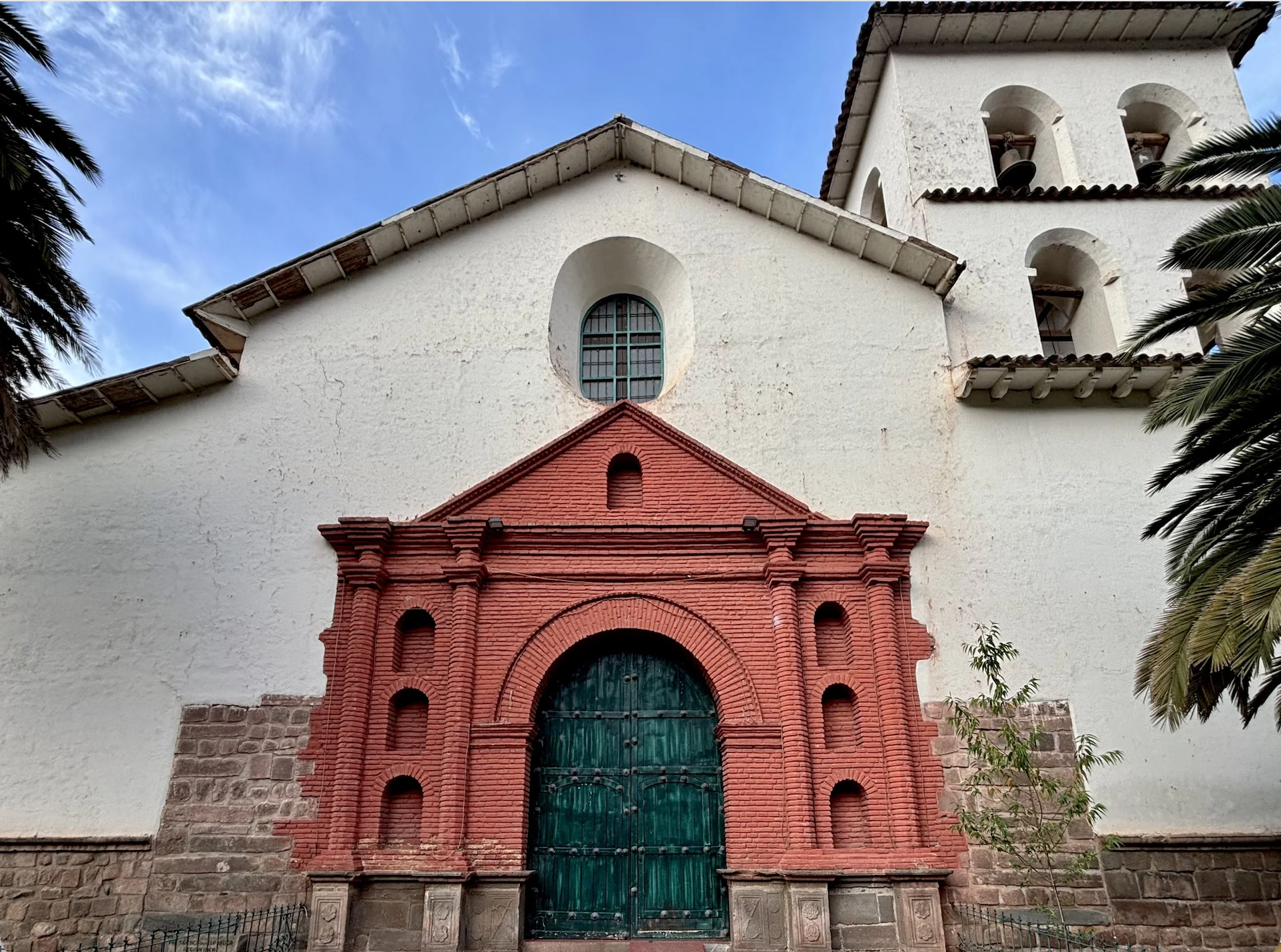
Pascua in Peru: Layers of Faith, Land, and Memory
While much of the world marks Easter as the arrival of spring, here in the Andes the season carries a different rhythm. In the Sacred Valley, Pascua arrives with rain, with green hillsides, and with a quiet sense of renewal that feels deeply connected to the land itself.
Pascua, or Easter, is part of Semana Santa — a week of processions, prayer, and remembrance observed throughout Peru. In nearby Cusco and surrounding villages, the streets fill with movement and devotion: saints carried through narrow roads, incense drifting through the air, bells echoing against stone walls. It is a time that feels both intimate and expansive, rooted in tradition and shared experience.
And yet, like so much in Peru, these traditions exist in layers.
Many of the churches where these ceremonies take place were built during the Spanish colonial period, often directly on top of earlier Incan temples and sacred sites. This was not incidental. For the Spanish, it was both a strategy of domination and conversion — to establish physical and symbolic presence over indigenous cosmology — and a way of drawing people toward the new centers of worship by placing them on land already understood to be sacred.
Long before the arrival of the Spanish, the Inca and pre-Incan cultures recognized certain places as huacas — sites imbued with spiritual significance. These could be mountains, springs, rock formations, or carefully constructed temples aligned with celestial and natural cycles. The land itself was not separate from the sacred; it was an expression of it.
When churches were built atop these sites, something complex began to unfold. While the intention may have been to replace one system of belief with another, in many cases what emerged instead was a kind of blending — a quiet continuity beneath the surface. Indigenous cosmology did not disappear; it adapted, intertwined, and found ways to remain present.
Today, during Pascua, that layering can still be felt.
A procession may move through a colonial plaza, framed by a cathedral built from the stones of an Incan temple. Devotion is expressed through Catholic imagery, yet the relationship to land, to cycles, and to unseen forces remains deeply Andean. It is not one story or another, but both at once.
For those of us living and working here, it is a reminder that this place holds history not just in its architecture, but in its energy — in the way people gather, in the way rituals are carried forward, and in the way the land continues to shape experience.
At El Verde, we often speak about creating space for reflection, connection, and renewal. Pascua, in its many layers, reflects all of these. It is a time that invites us to pause, to notice what has come before, and to consider how different ways of understanding the world can coexist — sometimes in tension, sometimes in harmony.
And perhaps most of all, it is a reminder that the land remembers.
Even as forms change, something deeper endures.