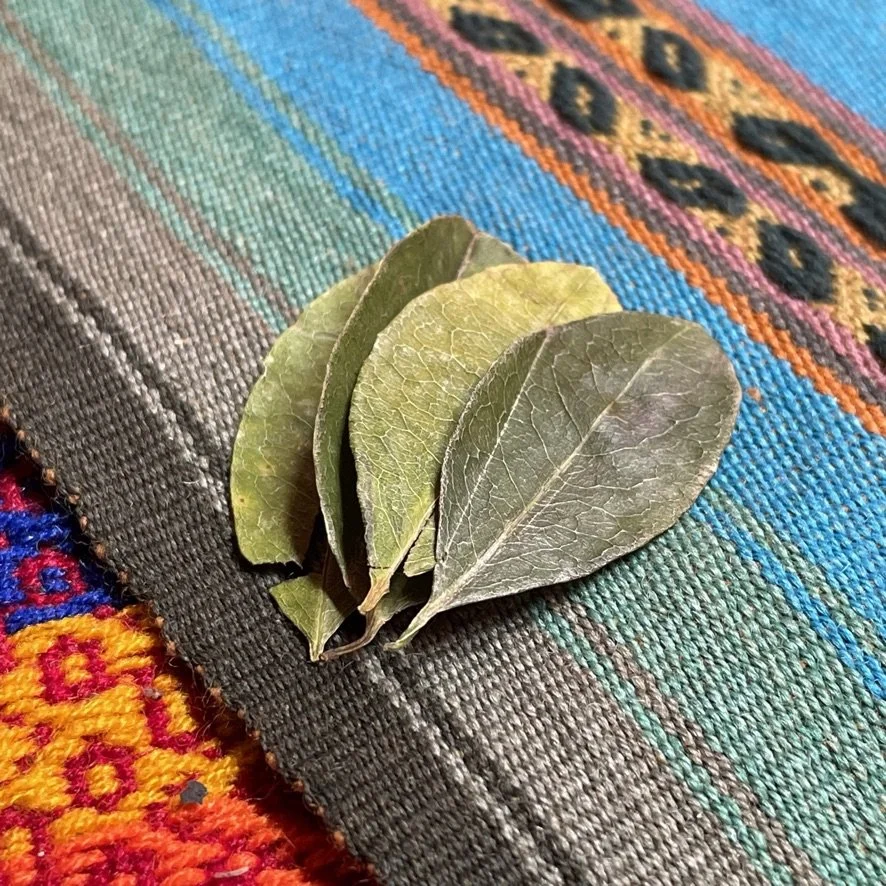
The Coca Leaf: A Small Leaf with a Long Memory
Ask someone who's just landed in Cusco how they're settling into the altitude, and there's a good chance the answer involves a cup of mate de coca. For visitors, coca often arrives as a practical suggestion — something you’re welcomed with by your driver, hotel staff or here at El Verde! But for the communities of the Sacred Valley, the leaf carries a great deal more than that. It's one of the oldest continuous threads in Andean life, and understanding a little of its history changes how it feels in your hands.
A plant older than the Incas
Coca's presence in this region predates the Inca Empire by thousands of years — archaeologists have found traces of it in tombs and offerings going back millennia, long before it became the tightly managed state resource the Incas made it into. Chewed, brewed, or offered to the earth, it was already woven into how people worked, healed, and prayed. The Incas formalized its cultivation and distribution — coca went to laborers building roads and temples, to warriors for endurance, to priests for ceremony — but they didn't invent its meaning. They inherited it.
Carried, not just consumed
What's struck me, living here, is how coca is less a substance people "use" and more something they carry — into a conversation, a workday, a ritual. Farmers still bury a few leaves in the ground before beginning work, a small acknowledgment to Pachamama before asking anything of her. In a despacho — the ceremonial offerings still made across the Sacred Valley — coca sits alongside flowers, grains, and sweets, each item a kind of sentence in a larger prayer. Shamans and paqos read fresh leaves scattered across a cloth (the mesada), reading the story in how they land — a practice that treats the leaf less as a tool and more as something capable of speaking back.
None of this is distant history. It's Tuesday-afternoon practice for people we work alongside here at El Verde.
What the leaf actually contains
Set the ceremony aside for a moment and the plant itself is genuinely interesting. Coca leaves carry calcium, iron, and phosphorus, along with several B vitamins and a notable amount of vitamin A — enough that in parts of the Andean diet, where fresh produce can be limited by altitude and geography, the leaf has functioned as a real nutritional supplement, not just a folk remedy. Its mild alkaloid content is what gives chewed or brewed coca its gentle stimulant effect — comparable to a cup of tea rather than anything more intense — and it's this same property that's long been credited with easing the fatigue, headache, and appetite loss of soroche, altitude sickness. It's worth saying plainly: the scientific evidence for coca's effect on altitude sickness specifically is thin, even though generations of Andean experience point to it. What isn't in dispute is that the leaf is nutritionally real, mildly energizing, and entirely different from the substance it's sometimes confused with.
That confusion is worth naming directly, because it still shapes how visitors approach coca. The leaf is legal and openly sold throughout Peru — you'll find it in markets, on trekking trails, in the tea service of most hotels here in the Valley. Cocaine is a heavily processed derivative requiring industrial chemistry and enormous quantities of leaf; chewing coca or drinking mate de coca bears roughly the same relationship to cocaine that eating a poppy seed bagel does to opium. Andean communities have spent decades pushing back on the leaf being conflated with the drug, and it's a distinction worth carrying with you respectfully.
An invitation, not a performance
If you spend time with us in Huarán, you'll likely be offered coca more than once — in tea, or loose leaves set out simply so you can try chewing them the way locals do, tucked into the cheek with a little llipta (the alkaline ash that helps release the leaf's effects). There's no wrong way to receive it. Say yes if you're curious, decline if you're not, and either way, it's worth knowing what you're being offered: not a souvenir or a gimmick, but a small piece of something that has held meaning here for longer than almost anything else still standing.